Heatcatcher Logo
Heatcatcher Logo

Case studies

Heatcatcher commissions the UK’s first waste heat to high temperature heat pump for brick dryers.

Heatcatcher commissions the UK’s first waste heat to high temperature heat pump at wienerberger Warnham.

November 2025:
wienerberger is a building solutions provider and the world’s largest producer of bricks, paving blocks and roof tiles with 14 plants for such products in the UK. The Warnham brick works manufactures around 150 thousand tonnes of bricks per year.

The production process involves the pressing of the clay mixed with water into moulded bricks which are then dried in heated chambers before firing in the kiln. The Warnham site has 7 large drying chambers, heated by recovered heat from the kiln and natural gas fired burners. As the bricks are dried the heat and water vapour is exhausted from the chamber stacks to the environment, a loss of heat and water.

As part of wienerberger’s commitment to decarbonise their operations, a funding grant was awarded by DESNZ (Department for Energy Security and Net Zero) under the Industrial Energy Transformation Fund. This facilitated a project to recover the heat and water from the 7 chamber stacks to a heat recovery tower, condensing the hot water to supply to a heat pump system powered by zero carbon electricity.

Keith Jackson, Head of Thermal Process and Projects, wienerberger, commented: “This project has demonstrated the benefit of installing heat pumps in factories where significant energy and water is lost from the brick drying process. The significant reductions in CO2 emissions, represent a positive step towards achieving the ambitious CO2 reduction targets wienerberger has set itself across its building solutions business. Our collaboration with Heatcatcher Ltd allowed us to take advantage of our understanding of the technology deployed at the Wolfswaard factory and to ensure the application to the larger operations at Warnham did not present a risk in the eventual delivery of the project.” 

Heatcatcher were the Principal Designers and Contractors managing the project delivery of the waste heat and water recovery system from the 7 chamber stacks to the heat pumps and the heat delivery network into the 7 drying chambers.

Darren Bryant, Heatcatcher CEO, added “The system design is first of its kind in the UK for a drying process at a brick works. Working with the wienerberger team at Warnham made the design and delivery of the project a real success and we are excited about the future water, natural gas and carbon emissions savings achievable by wienerberger following the systems commissioning

How does the waste heat conversion work?
The heat pump system supplies high temperature hot water to a heating system installed in the 7 chambers. The hot water heating system in the chambers offsets the heating provided by the natural gas burners. The excess condensed water recovered by the tower is recovered back to mix with the clay to mould the bricks, significantly reducing the site water usage.

  • The heating of the 7 drying chambers and different stages in the drying cycle are preheated by 2 x 1.3 MWth high temperature water sourced heat pumps supplying hot water up to a maximum of 90ºC.


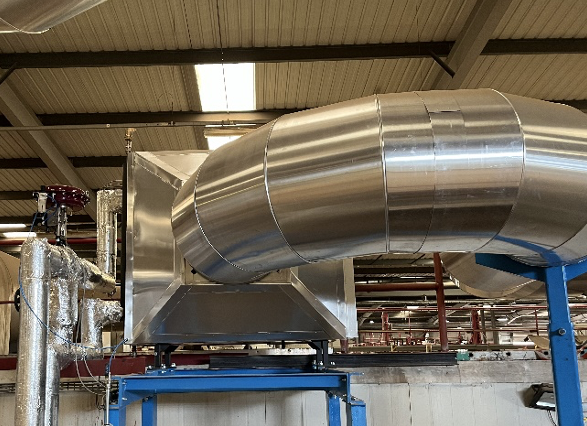
  • The 7 drying chambers were modified to include a ceiling plenum chamber fitted with a network of hot water heat exchangers heating the circulating air in the chambers to the required control temperature.


Greg Crownshaw, Project Manager, Major Projects and Energy at wienerberger, concluded: “wienerberger and Heatcatcher have worked together very successfully on this project to deliver a novel solution for Heat recovery from a previously untapped “low grade” resource. A challenging installation in an existing factory whist operational, was completed by great communication and collaboration with the Site team from day one. Not only have we gained significant decarbonisation benefits but we have also gained water recovery benefits and improved the turn around time of the dryers by improved chamber flows.”  

This case study is issued by Heatcatcher Ltd. For more information, please contact Darren Bryant at darren.bryant@heatcatcher.com or 01273 358520.

About wienerberger
wienerberger UK & Ireland is building for what’s next— delivering full building envelope solutions for the built environment. Uniting leading brands and expertise, we empower our partners to create lasting impact, with quality products, technical support, and a shared commitment to progress.
Wienerberger concrete tile factory at Sandtoft

Heatcatcher completes first industrial heat pump system for Wienerberger concrete tile factory at Sandtoft

February 2024:  The Wienerberger Group is a building solutions provider and is the world’s largest producer of bricks, paving blocks and roof tiles with 14 plants for such products in the UK. The Sandtoft site produces concrete roof tiles, manufacturing around 2.8 million m²/ year. 

The production process involves extruding of the concrete mix into precisely shaped moulds and then curing to ensure strength and durability. Sandtoft site has no Natural Gas connection, so the heat needed to carry out the curing process has relied on fuel oil firing in boilers to heat circulated hot water. As part of Wienerberger’s commitment to decarbonise their operations - Sandtoft air source heat pumps project seeks to switch fuel from oil to Green Electricity in part of the site known as Factory 1. 

Air Source Heat pumps are a known technology taking energy from ambient air and using electricity to provide hot water in a much more energy efficient way than simple electrical heating and this efficiency and optimising of control can help mitigate the significantly higher energy cost of electricity vs natural gas or fuel oil. 

“Our collaboration with Heatcatcher Ltd allowed us to ensure our basic understanding of the technology did not present a risk in eventual delivery of the solution.

We see Heatcatcher as a competent partner for study and calculation of energy supply and demand from the ambient air across seasons to the thermal load of the curing process.

The collaboration therefore allowed our strengths in production processes, materials, measuring and monitoring to be supported with their knowledge of thermal process.

Execution on site was managed locally with support of contractors for building, piping and electrical work”   

Keith Jackson , Head of Thermal Process and Projects 

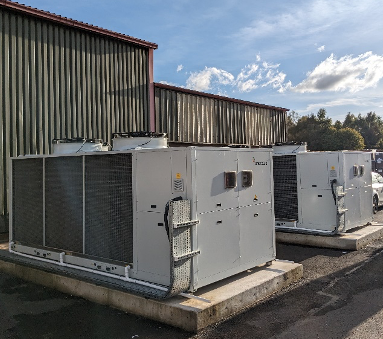
“The five curing chambers were heated by 2 x 120 kW Gas Oil Boilers hot water system supplying hot water at a maximum of 80 ºC. The existing hot water system and controls were modified for the hot water supply to be alternatively supplied by a system of 2 x 62 kW Air Source Heat Pumps and 2 x Thermal Bufffer tanks. The system design is first of its kind in the UK for curing concrete tiles. Working with the Wienerberger team at Sandtoft made the design and delivery of the project a real success and we are delighted with the significant gas oil and carbon emissions savings achieved for the operation of the plant”

Darren Bryant, Heatcatcher CEO 

“This project has demonstrated the benefit of installing heat pumps in factories curing concrete in order to reduce their CO2 emissions and support decarbonisation.  This represents a significant step to achieving the ambitious CO2 reduction targets Wienerberger has set itself across its building solutions business”

Nikki McDonald, Wienerberger Sandtoft Plant Manager 

This case study is issued by Heatcatcher Ltd. For more information, please contact Darren Bryant at darren.bryant@heatcatcher.com  or 01273 358520.


Wienerberger Tile Factory at Broomfleet

Heatcatcher completes Waste Heat Recovery system for Wienerberger Tile Factory at Broomfleet

February 2023: Wienerberger is the UK’s leading provider of wall, roof and landscaping innovations, offering outstanding, sustainable solutions for new build and renovation.   

In the UK, Wienerberger have head offices located in Manchester and Doncaster, showrooms in London, Belfast and Surrey, with factory sites in Manchester, Co. Durham, Worcestershire, North Warwickshire, West Midlands, North Kent, Surrey and West Sussex. They employ over 1500 staff in the UK across 15 sites, delivering high quality services and solutions to customers. 

Their Broomfleet site is the only clay roof tile plant in its UK portfolio and operates using a gas-fired tunnel kiln and dryers.  The site at Broomfleet was originally used for Brickmaking dating back 191 years ago to 1830. 

The newest factory at Broomfleet, Factory 4 was built in 2005 and produces large & medium format tiles. Previous efficiency work has taken place to optimise the firing process in this factory but the one area they had not been able to recover energy from was the kiln exhaust system, so they applied with Heatcatchers help to the Industrial Heat Recovery Support (IHRS) funding from the UK Government Department BEIS to help fund a project. 

“Working alongside Heatcatcher, Wienerberger made the transition a smooth process from concept to a completed installation, with the support and expert knowledge at all stages. This included the IHRS application, detailed engineering report to ensure correct specification of the equipment, and finally the full project management of the installation and commissioning of the equipment. Since going into full operation in August 2022 it is currently saving monthly approximately 525 MWh of gas which represents a reduction of over 700 Tonnes per year of Carbon Dioxide emissions.”

Steven Marshall, Wienerberger Northern Thermal Process Engineer 

“The system recovers waste heat from the tunnel kiln exhaust gas to preheat the combustion air and drying chamber air.  The system design is first of its kind for the ceramic industry, indirectly transferring heat between heat exchanger locations with a pressurised hot water circuit, instead of the direct ducted method over long distances. Working with the Wienerberger team at Broomfleet made the design and delivery of the project a real success and we are delighted with the significant gas and carbon emissions savings achieved for the operation of the plant”

Darren Bryant, Heatcatcher CEO 

“This project has demonstrated the benefit of installing heat exchangers on factories with excessive exhaust temperatures to recover the wasted energy for deployment back in the process. This represents a significant step to achieving the ambitious carbon reduction targets Wienerberger has set across the business”

Tim Dudding, Wienerberger Broomfleet Plant Manager 

This press release is issued by Heatcatcher Ltd. For more information, please contact Darren Bryant at darren.bryant@heatcatcher.com  or 01273 358520.

Wastecare Sandwich

Heatcatcher completes Waste Heat to Power system for Heliex Power at WasteCare East Kent Recovery Facility. November 2021.

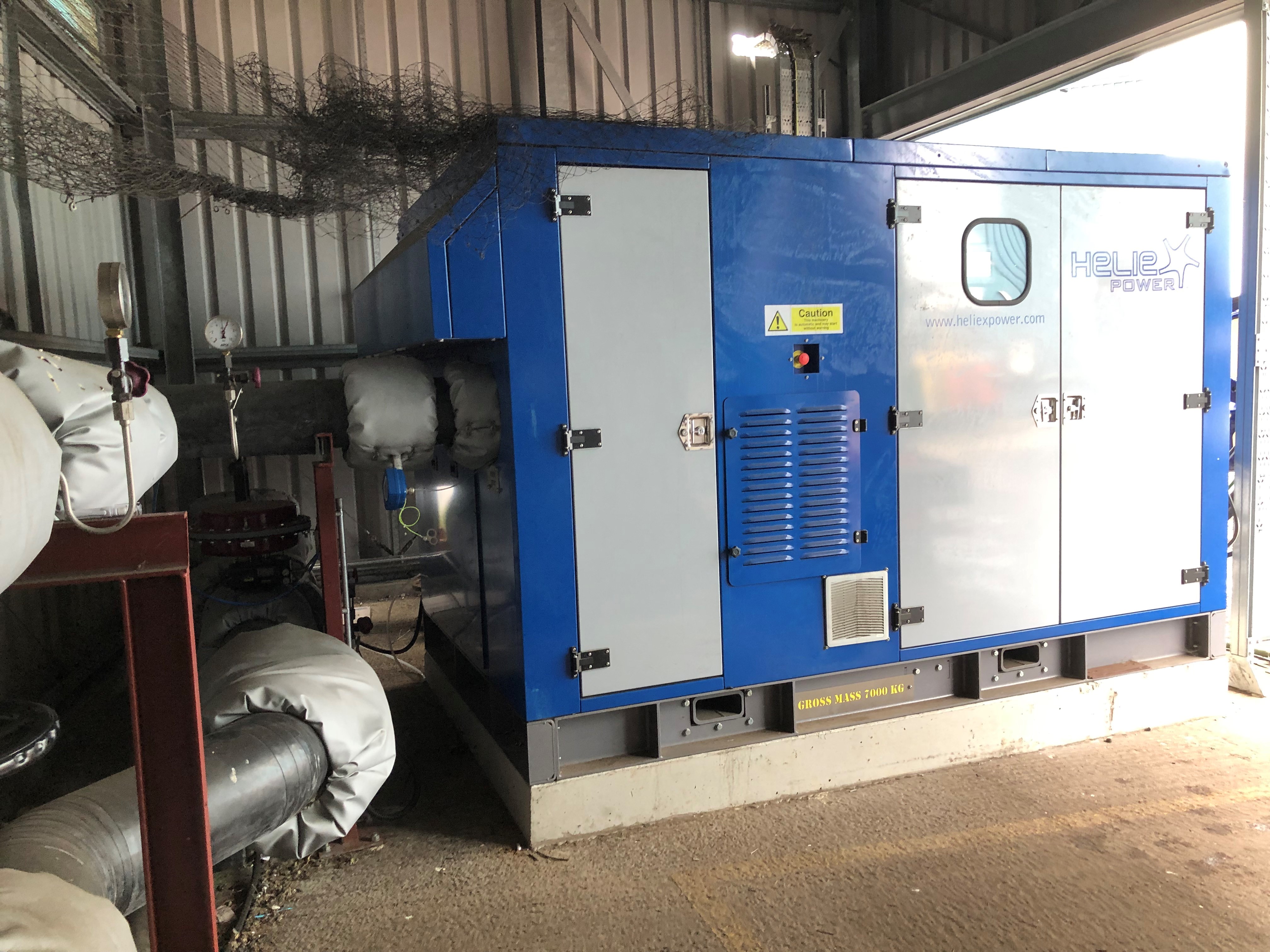
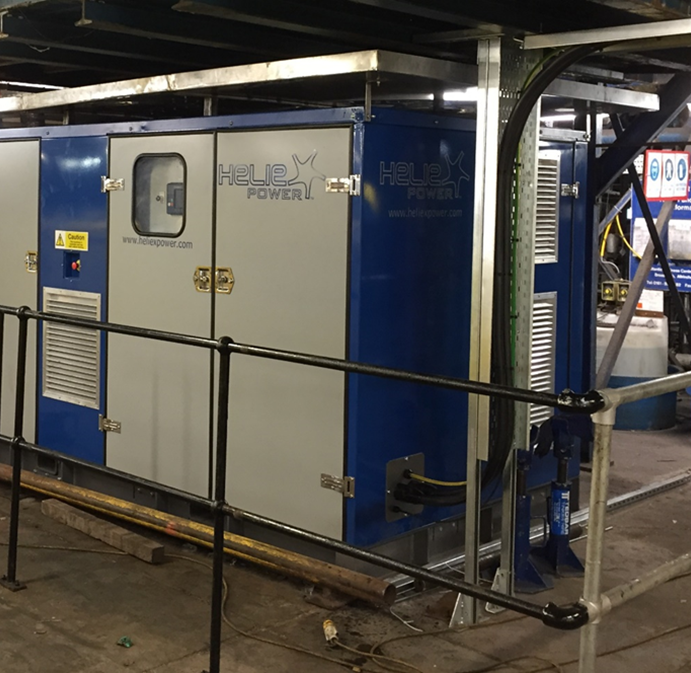
A new waste heat to power project completed by waste heat recovery project company Heatcatcher, chosen by Heliex Power Ltd, to integrate its innovative Twin Screw Turbine technology into a new heat to power and steam condensing system at the Wastecare Ltd, East Kent Waste Recovery Facility.

WasteCare owns and operates the hazardous waste incinerator located in Sandwich, Kent; the facility is fully permitted and regulated and has the capability of destroying a maximum of 13,000 tonnes of hazardous waste per year. Waste types includes, clinical, laboratory chemicals, reactive wastes and others requiring incineration temperatures up to 1,200ºC. Since Wastecare purchased the facility in 2019 they have been committed to investing in the facility to make the process more efficient in both increased throughput and energy conservation. The energy recovery facility was historically exporting its generated steam to the local Science Park, this energy was being used inefficiently within the Parks steam ring main which is used for heating buildings within the park, Wastecare previously imported electricity from the national grid via a private network. 

In 2020 Wastecare invested in a waste heat recovery project to decentralise from the Science Park providing an option to use their own steam to generate up to 70% of the plants electrical demand with the Heliex Power 200 kW electricity generator. 

Brian Jarvest, Deputy Site Manager Wastecare East Kent Recovery Facility

“Delivery of the project faced a number of challenges through COVID-19 restrictions, and the technical challenges of generating our own power within a private network, within a national grid network. Despite the challenges we were very pleased with the way Heliex Power and Heatcatcher supported us through the project delivery hurdles. The waste heat to power system now provides us with operational independence and significantly reduced electricity costs.”    

Paul Drennan-Durose, CEO Heliex Power said: “We’re delighted WasteCare chose to install a Heliex Power Twin Screw Turbine system as part of its ongoing commitment to energy saving and on-site efficiency. Our technology is ideally suited to projects where there is surplus waste heat, harnessing it in a cost effective and reliable way, resulting in lower energy bills and operational flexibility for our clients.” 

Darren Bryant, CEO of Heatcatcher Ltd, said: “It’s a great endorsement of Heatcatcher’s waste heat recovery project skills to be selected again by Heliex Power to successfully deliver this project. With heat from industrial processes accounting for 14% of the UK’s carbon emissions we expect an increasing demand for our services as energy intensive users increasingly focus their efforts on projects that decarbonise their heat.” 


Steel & Ceramics Consortium

Steel and ceramics sectors consortium identify opportunities to cut carbon emissions. 

A consortium of companies from the steel and ceramics sectors, led by the Materials Processing Institute, has investigated ways of improving waste heat recovery from furnaces leading to several opportunities to cut carbon emissions.


The Institute worked with British Steel, Wienerberger UK, Heatcatcher Ltd and Low Carbon Europe Ltd as part of a project that is contributing to the National Energy and Climate Plan which includes Clean Growth Strategy requirements to improve business energy efficiency by 20 percent by 2030.

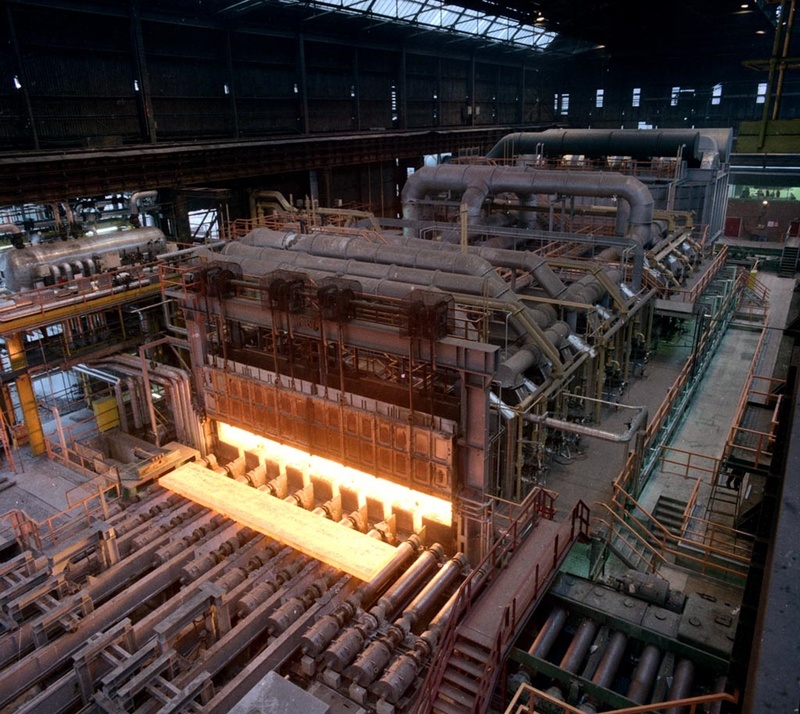
With both the steel and ceramics industries using gas-fired furnaces in continuous operation at temperatures in excess of 1000°C, the project sought to highlight best practice and investigate methods of waste heat recovery to improve energy efficiency and environmental practices.

It compared a British Steel reheating furnace with brick kilns operated by Wienerberger UK, examining combustion efficiency and heat flows.

The project identified ways to reduce the amount of gas used in the process, including introducing clean-burning hydrogen to the fuel mix by making changes to the furnace burner.

It also identified opportunities to

  • Reuse heat from cooling systems to pre-heat the combustion air in brick kilns
  • Generate electricity from excess heat in the furnace cooling system
  • Use of remnant heat in the steel furnace exhaust to generate electricity using organic rankine cycle turbine
  • Improve combustion efficiency through modern burner technologies

Both the steel and ceramic sectors have already made strides in reusing exhaust heat to pre-heat product. In addition, the brick kilns use further exhaust heat to dry product while the steel furnace recuperates exhaust heat.

The results are being shared across the foundation industries to encourage take up of improved technologies and waste heat recovery. This includes more than 40 other brick kilns and 20 steel reheat furnaces in the UK.

The project was partly funded by Innovate UK through the Fast Start Competition, a research and development initiative run by the Transforming Foundation Industries Challenge, providing up to £5 million for cross-sector, collaborative, feasibility studies and industrial research and development projects focused on common resource and energy efficiency opportunities.

Chris McDonald, Chief Executive of the Teesside-based Materials Processing Institute, said: “This project is a successful example of how the steel and ceramic sectors have worked together, supported by Innovate UK, to share expertise and develop practical solutions to reduce carbon emissions.

“The outcome of this particular project is encouraging, having identified ways to refine an already highly efficient process by improving heat recovery and combustion technologies.

“We are confident the improvements identified are applicable to all similar continuous reheating furnaces and brick kilns and have the potential to deliver widespread benefits to the steel and ceramic sectors.”

Darren Bryant, Chief Executive of waste heat recovery specialist Heatcatcher Ltd, said: “The consortium provided a unique opportunity to compare the combustion profiles of the ceramic and steel sectors and recommend best practice solutions to increase the recovery of waste heat. Having worked in isolation across many of the foundation industry sectors, our involvement in the exchange of knowledge and ideas across the sectors provided an innovative shared approach to identifying carbon emissions under the successful leadership of the Materials Processing Institute. An effective project approach that we recommend for adoption across other foundation industry sectors.”

Dr. Gari Harris, Head of R&D at British Steel, added: "With the support of Innovate UK, this consortium has developed a powerful team that not only delivered a successful collaboration for this project but can be called on again for subsequent decarbonisation and energy saving products. The energy savings identified in this project have generated great excitement within British Steel, as we have around 20 similar furnaces across our parent company with the potential for similar savings in each."

Greg Crownshaw, Thermal Process Engineer at Wienerberger UK added, “Working with the consortium has been fascinating, allowing us to compare two high temperature processes and energy intensive industries. Through this, we have been able to identify improvements and opportunities to share best practices in steel reheat furnaces and brick tunnel kilns. This project is a great example of cross industry collaboration to work on reducing carbon emissions going forward and is aligned with Wienerberger’s sustainability strategy ‘Let’s Build Beyond’, which encourages partnerships to reduce carbon emissions from our manufacturing processes”.

Darren Jones, Managing Director of LCE, commented: “Being a part of this consortium allowed us to collaborate with on-site experts in the two fields to not only identify savings, but also identify where the processes differed, and how technologies can improve these areas. It also highlighted solutions that each industry has already undertaken as a standard, that through projects such as this, can be shared with other industries that have not yet identified that solution. We are excited that the consortium’s method could be rolled out across similar processes and indeed, other industries, to ensure best practice is shared effectively.”


Leeds Clinical Waste Incinerator

Heatcatcher Ltd completes ‘waste heat to power’ system for Medical Waste Incinerator

Brighton based company delivers on Heliex Power steam screw expander technology.


  • New system results in significant reduction in sites electrical consumption from the grid
  • Annual Energy saving measures of 1,352 MWh
  • CO2 output reduced by 730 tonnes per year

Heatcatcher integrators of the best available ‘waste heat to power’ technology have announced the successful completion of another  Heatcatcher System, at a Medical Waste Incineration plant near Leeds, which is now fully operational.

The system, which cost £0.3million to design, build and deliver, is on course to deliver a return on the investment within three years. Early data indicates that it can be expected to generate net power of around 1,352MWh annually, equivalent to 7,500 hours of carbon-free electricity. In total, CO2 output will be reduced by 730 tonnes per year.

Owners of the Waste Management Plant are keen to make further investments across its other UK plants.  The Heliex System is being incorporated into the site’s existing process for cooling incineration furnace gases, which can reach temperatures of 1000°C. Once cooled the gasses are made safe before being released to the atmosphere. A heat exchanger is used to absorb the heat from the furnace gases to heat water, which is turned into steam. This steam will go through the Heliex system, where it will be used to generate electricity, before being condensed to water and then returned to the heat exchanger to start the process again.

Based on proven twin rotary screw principles the Heliex steam screw expander generator set converts the waste steam energy from the boiler into clean electricity via a simple and effective thermo dynamic cycle. The generator output matches the frequency and voltage of the grid, and this electrical output is fed back into the plant’s power supply.  Heliex’s patented technology works where  turbines can’t as screw expanders can process wet steam and fluctuating flows.

Steetly Dolomite

Heatcatcher Ltd completes ‘waste heat to power’ system for Steetley Dolomite

Brighton based company delivers on £1.3million generator contract.

  • New system results in 25% improvement in electrical efficiency
  • Annual Energy saving measures of 3,000 MWh - equivalent to the energy required by 150 homes
  • CO2 output reduced by 1,600 tonnes per year

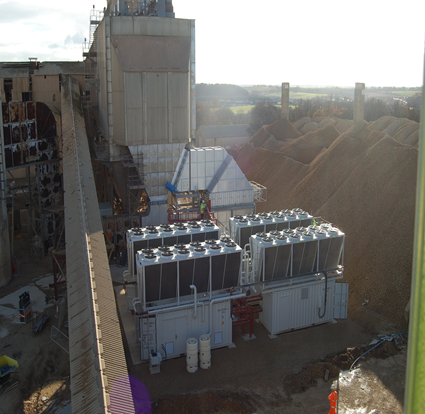
‘Waste heat to power’ specialists Heatcatcher Ltd have announced that their first Heatcatcher System, at the Thrislington lime plant near Durham, is now fully operational.

The system, which cost £1.3million to design, build and deliver, is on course to deliver a return on the investment within five years. Early data indicates that it can be expected to generate net power of around 3,000MWh annually, equivalent to 7,500 hours of carbon-free electricity. In total, CO2 output will be reduced by 1,600 tonnes per year.

Steetley Dolomite are keen to make further investments across its two plants after securing a £4m funding package from HSBC’s Nottinghamshire Commercial team.

Lime and cement manufacture is currently one of the most energy intensive and greenhouse gas emitting industrial processes in existence. The industry contributes roughly 5% of global man-made CO2 emissions, nearly three times the amount generated by air travel worldwide.

The Heatcatcher System works by using the waste heat to vaporise a refrigerant, which in turn drives a rotary generator. The variable frequency and voltage output of the generator are converted to match the grid, and this electrical output is fed back into the plant’s power supply. Every stage of the process has been calibrated to minimise energy losses within the system. In total, each plant fitted with the system recovers 4MWh of thermal power, and converts it to 0.5 MW of cheap, low-carbon electrical power.